





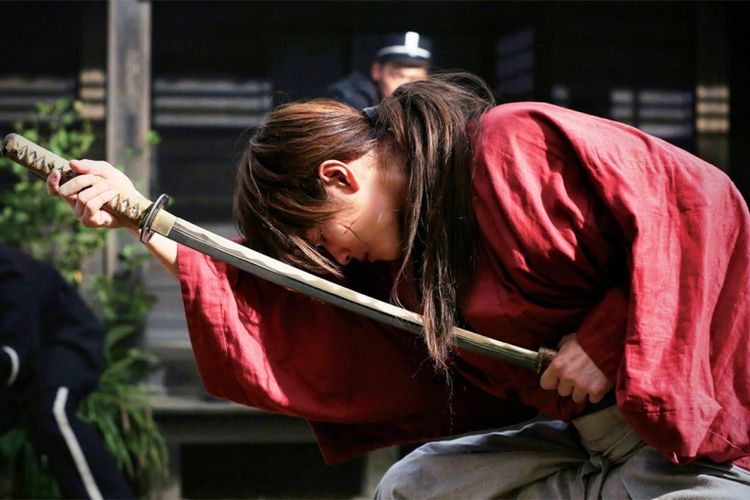

Japanese swords are more than weapons. They represent centuries of craftsmanship, discipline, strategy, and cultural identity. Each sword was created for a particular purpose, and its length, curvature, balance, and method of use reflected the needs of the warrior carrying it.
The Tachi was one of the important swords of Japan’s earlier warrior traditions. Its elegant curvature made it especially suitable for mounted combat, where speed and reach could make a significant difference. The Tachi reflects the beauty and sophistication of the classical samurai era.
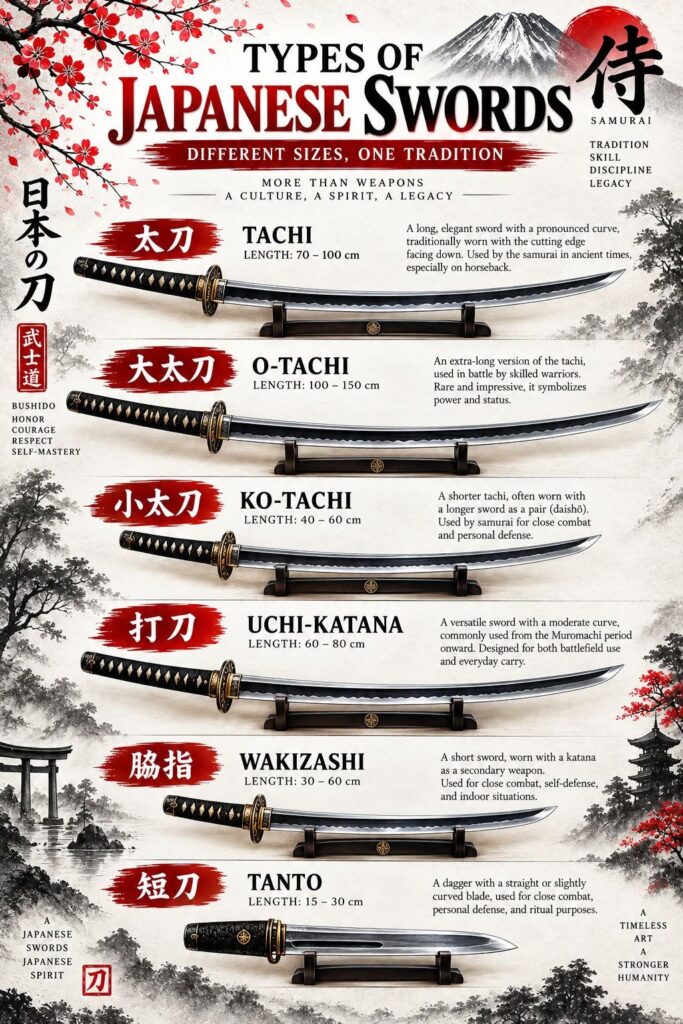
The O-Tachi, also known in some contexts as a Nodachi, was an exceptionally long sword. Its impressive size gave the warrior extended reach and created a powerful visual presence on the battlefield. However, controlling such a large weapon required considerable strength, skill, and training.
The Ko-Tachi was a shorter form associated with the traditional Japanese sword family. Its reduced length made it more manageable in situations where a longer blade was less practical. Like many Japanese weapons, its effectiveness depended not only on the blade itself but also on the ability of the person using it.
The Uchi-Katana represents an important development in Japanese sword culture. Designed for practical and efficient use, it became closely associated with the evolving style of samurai combat. Its balance, curved blade, and versatility helped establish the form that would later become strongly connected with the iconic image of the Japanese sword.
The Wakizashi was a shorter companion sword, commonly carried alongside a longer blade. It could be useful in confined spaces where a full-length sword was difficult to draw or maneuver. Together with a longer sword, it formed part of the famous paired-sword tradition associated with the samurai.
The Tanto was a short blade designed for close-range use. Despite its smaller size, the Tanto was an important part of Japanese arms and craftsmanship. Many examples demonstrate extraordinary attention to detail, showing that Japanese sword making was also considered an art form.
From the long and elegant Tachi to the compact Tanto, every Japanese sword tells a story. They reveal how warriors adapted their weapons to different situations while maintaining a deep appreciation for craftsmanship and tradition.
The legacy of Japanese swords continues today through museums, martial arts, collectors, historians, and skilled artisans. Their true significance goes beyond the battlefield. They are symbols of discipline, honor, skill, history, and the enduring spirit of Japanese culture.
Different sizes. Different purposes. One extraordinary tradition.